
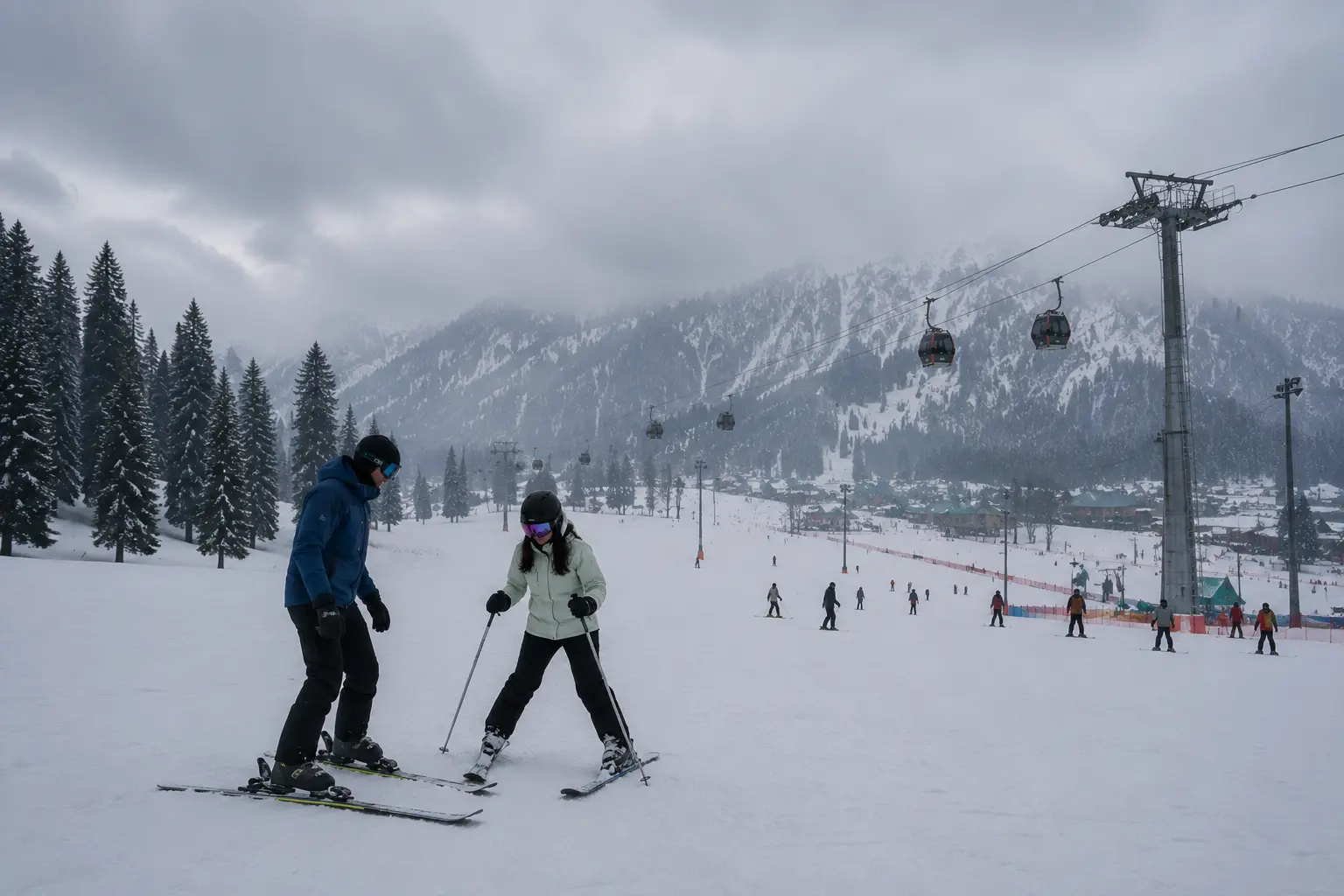
If you’ve ever watched skiers glide effortlessly down snow-covered mountains, you’ve probably wondered how to learn skiing in India. The good news is that you don’t need years of experience or expensive international trips to enjoy this exciting winter sport. India is home to some of the finest skiing destinations in Asia, with Gulmarg in Kashmir leading the way as the country’s premier ski destination.
Whether you’re planning your very first ski holiday or looking for a structured training program, learning to ski is more accessible than ever. With the right instruction, suitable equipment, and a beginner-friendly slope, most first-time skiers can confidently make their first turns within just a few days.
In this guide, we’ll cover everything you need to know—from choosing the best ski destination and understanding equipment to preparing physically and knowing what to expect on your first day. By the end, you’ll have a clear roadmap to begin your skiing journey in India.
Why Learn Skiing in India?
Over the past decade, skiing has become one of India’s fastest-growing adventure sports. More Indian travellers are choosing winter holidays that combine breathtaking mountain scenery with exciting outdoor activities.
Unlike many European ski resorts, India offers a unique Himalayan skiing experience at a comparatively affordable cost. Destinations like Gulmarg provide deep natural powder snow, long ski seasons, and professional instruction, making them ideal for beginners and experienced skiers alike.
Learning in India also means:
- Lower overall travel costs
- Easy domestic connectivity
- Himalayan powder snow
- Smaller class sizes
- Less crowded slopes compared to many international resorts
- Opportunities to progress from beginner to advanced terrain
For those looking to experience skiing without travelling abroad, India offers an excellent starting point.
Is Skiing Difficult for Beginners?
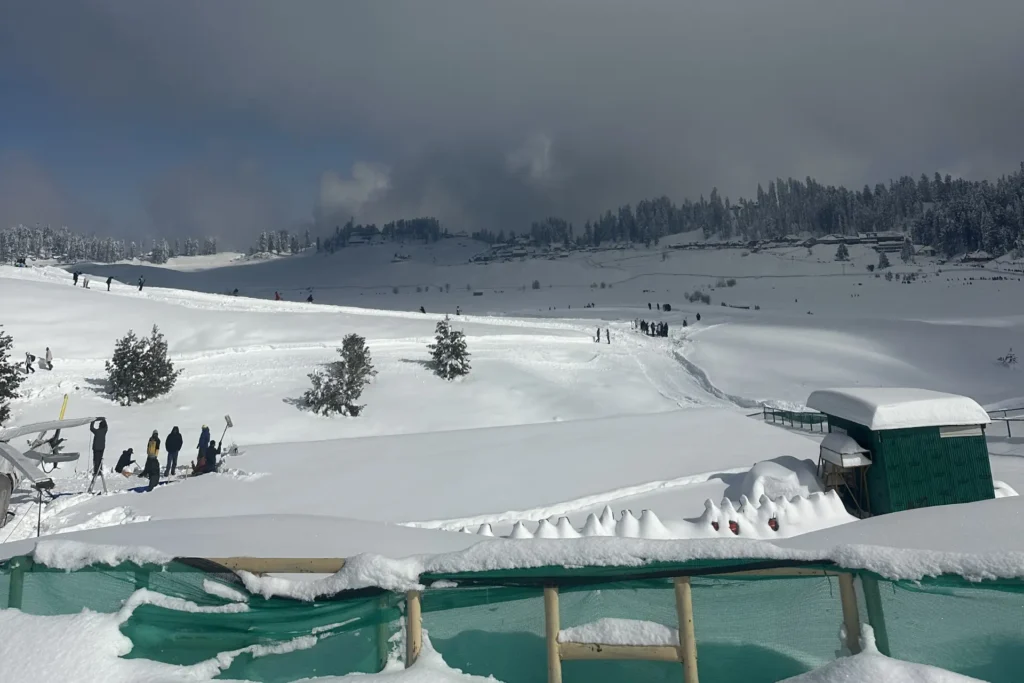
One of the biggest misconceptions is that skiing is extremely difficult to learn. In reality, modern ski equipment and professional instruction have made the sport much more beginner-friendly than ever before.
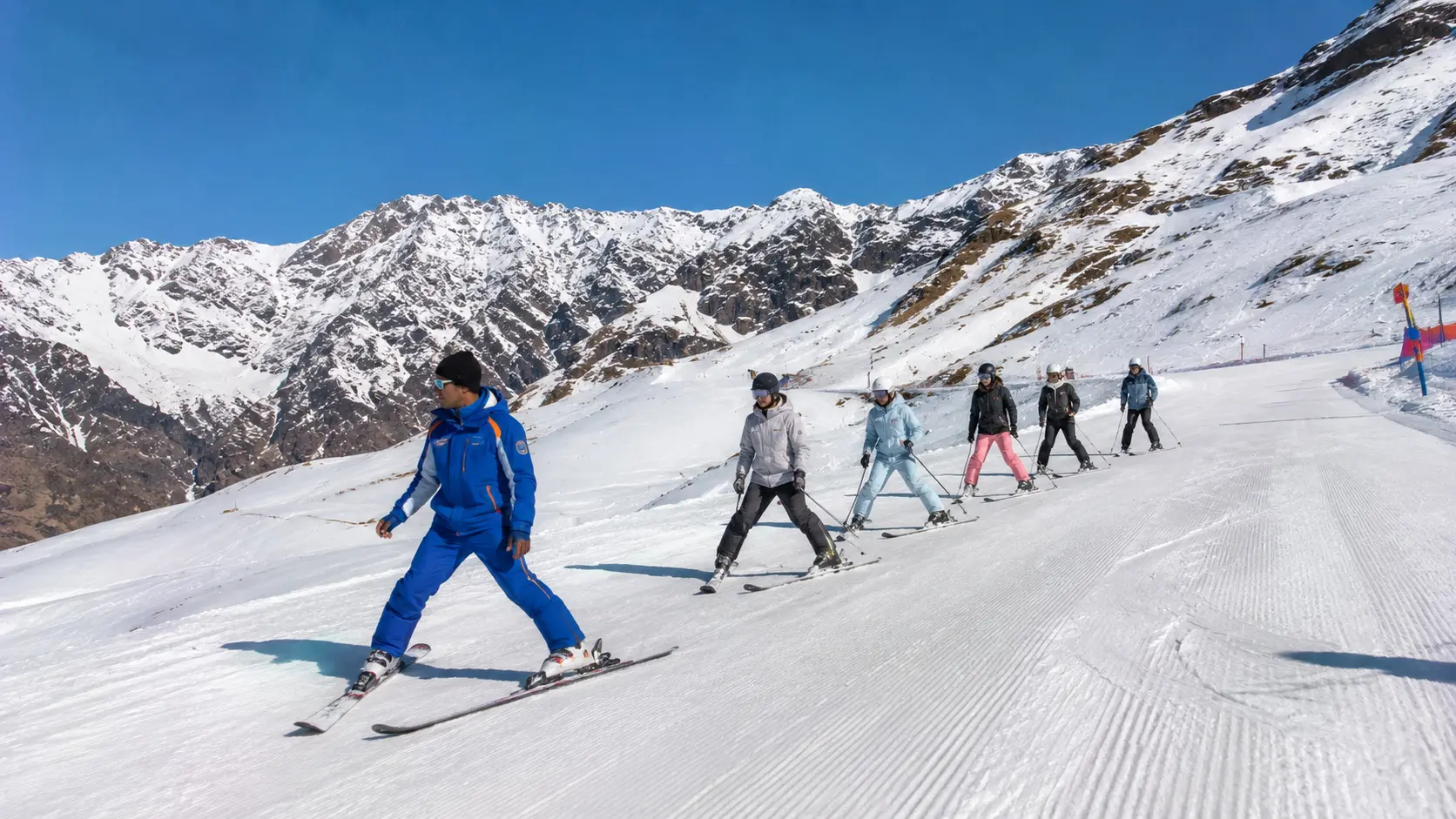
During your first lesson, you’ll focus on the basics:
- Walking in ski boots
- Wearing skis correctly
- Maintaining balance
- Sliding on gentle slopes
- Learning how to stop safely
- Making controlled turns
Most beginners spend their first day becoming comfortable with the equipment rather than skiing steep slopes. This gradual approach helps build confidence while reducing the risk of injury.
With proper guidance, many people can ski independently on beginner slopes within three to five days.
Where Can You Learn Skiing in India?
India has several destinations that receive reliable snowfall during winter, but not all are equally suitable for beginners.
Here are some of the most popular places to learn skiing:
Gulmarg
Jammu & KashmirKnown as India’s skiing capital, Gulmarg offers world-class snow conditions, gentle beginner slopes, internationally recognised instructors, and some of the longest ski runs in Asia. Its consistent snowfall and well-developed ski infrastructure make it the top choice for first-time skiers.
Auli
UttarakhandAuli is another excellent destination with breathtaking views of the Garhwal Himalayas. Its groomed slopes are suitable for beginners and intermediate skiers, making it a popular choice for families and first-time visitors.
Solang Valley
Himachal PradeshLocated near Manali, Solang Valley offers seasonal skiing opportunities during years of good snowfall. While its slopes are smaller than Gulmarg’s, it remains a convenient destination for travellers across North India.
Kufri
Himachal PradeshKufri provides a gentle introduction to skiing, making it an excellent place for first-time skiers. Snow conditions can vary depending on the season, so visitors should check the latest weather forecasts before planning their trip.
Why Gulmarg Is the Best Place to Learn Skiing
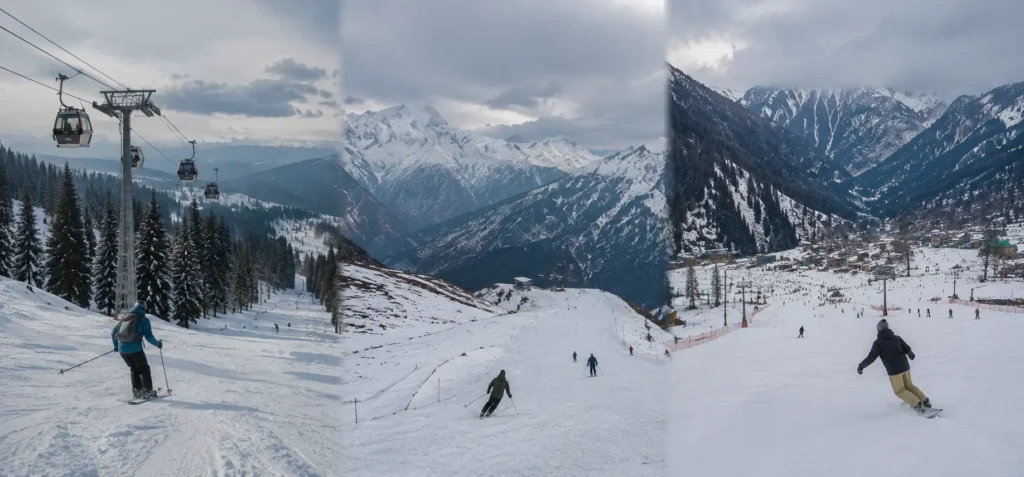
When people search for where to learn skiing in India, Gulmarg consistently ranks among the top recommendations—and for good reason. Located in the Pir Panjal range of Kashmir, Gulmarg receives abundant natural snowfall throughout the winter season. The combination of powder snow, beginner-friendly slopes, and access to advanced terrain makes it suitable for skiers at every level.
Some of the reasons beginners prefer Gulmarg include:
Another advantage is that beginners can continue improving their skills even after completing their initial lessons, as Gulmarg offers terrain suitable for every stage of learning.
What Equipment Do Beginners Need?
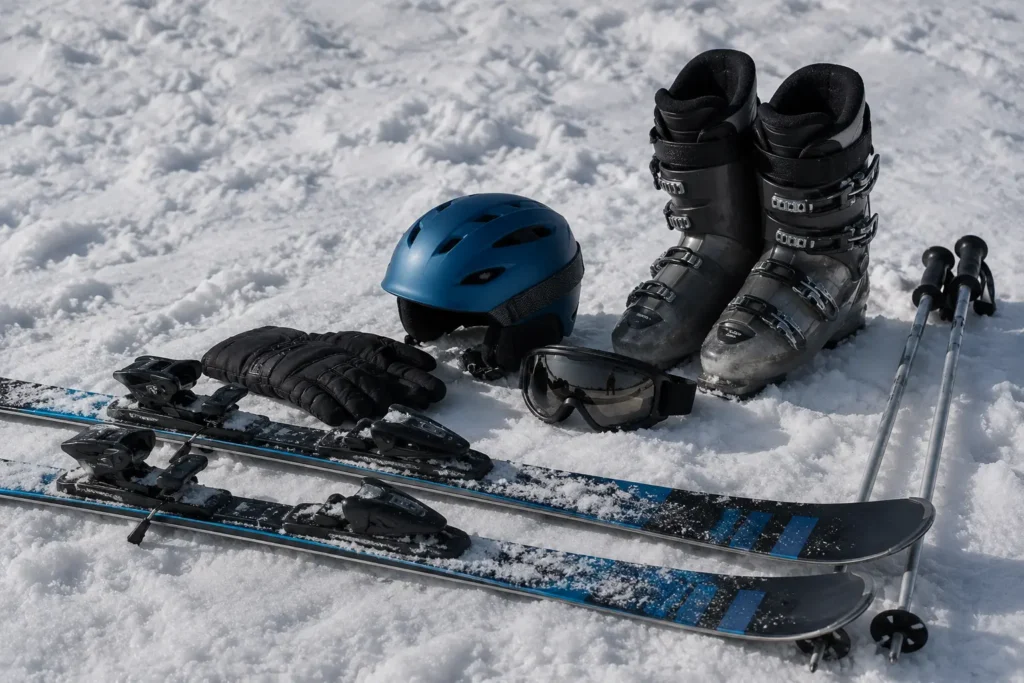
One of the most common concerns among first-time skiers is whether they need to purchase expensive equipment before learning. Fortunately, most ski schools and organised training programs provide rental equipment, making it unnecessary for beginners to invest in their own gear. A typical beginner skiing setup includes:
🎒 Beginner Ski Packing Checklist
Whether you’re renting or bringing your own gear, here’s a complete checklist of the essential equipment and clothing you’ll need for a comfortable and enjoyable skiing experience.
Dressing in layers is essential, as mountain weather can change quickly. Moisture-wicking base layers help regulate body temperature, while waterproof outerwear protects against snow and wind.
How Long Does It Take to Learn Skiing?
One of the first questions people ask before booking a ski holiday is “How long does it take to learn skiing?” The answer depends on your fitness level, confidence, and the quality of instruction you receive. Fortunately, skiing is a skill that most beginners can start enjoying much sooner than they expect.
Here’s a general learning timeline:
Day 1
Getting ComfortableYour first day is all about building confidence rather than speed. You’ll become familiar with your equipment and the fundamentals of skiing.
- ✓Learn how to wear ski boots and skis correctly.
- ✓Carry your equipment safely.
- ✓Practise basic balance techniques.
- ✓Walk and slide on flat snow.
- ✓Learn the snowplough (“pizza”) stop.
Day 2–3
Learning ControlBy the second or third day, most beginners begin linking turns together and skiing with much greater confidence.
- ✓Control your speed.
- ✓Make smooth, controlled turns.
- ✓Ride beginner ski lifts.
- ✓Build confidence on gentle slopes.
Day 4–5
Skiing IndependentlyAfter several days of practice, most beginners are comfortable skiing independently on beginner-friendly slopes.
- ✓Ski confidently on green runs.
- ✓Progress onto easy blue slopes.
- ✓Improve turning and stopping techniques.
- ✓Enjoy longer runs with confidence.
Pro Tip
Booking consecutive days of instruction is far more effective than taking single lessons spread across several weeks. Practising on back-to-back days helps reinforce muscle memory, builds confidence faster, and allows you to progress naturally from one skill to the next.
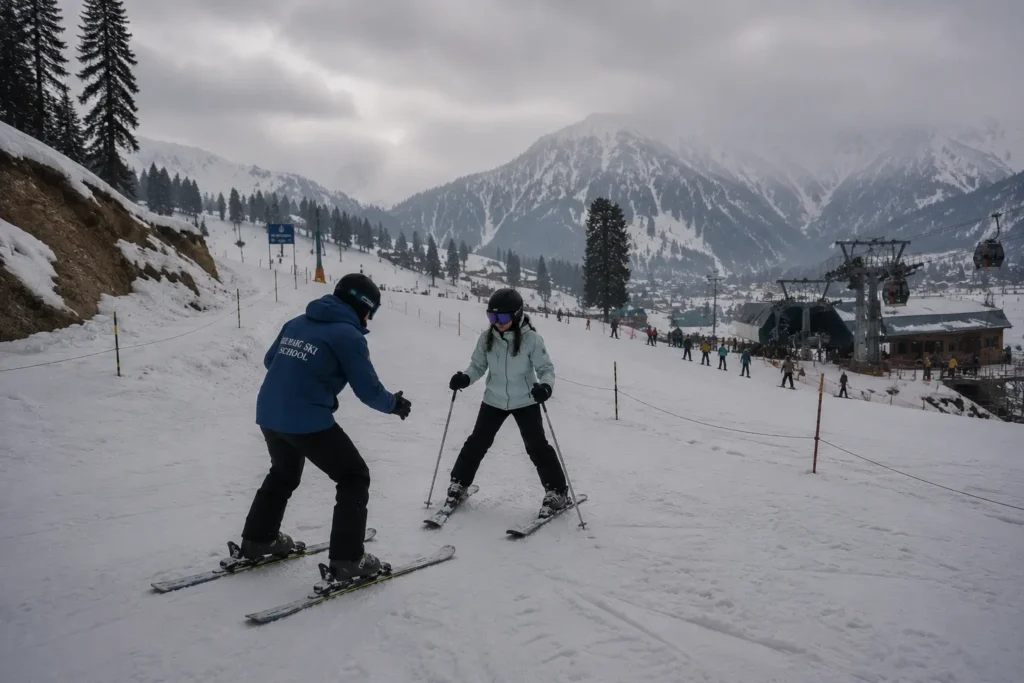
What Happens During Your First Ski Lesson?
Knowing what to expect can ease first-day nerves. A professional beginner lesson is carefully structured and focuses on safety first. A typical lesson includes:
Equipment Fitting
Your instructor or rental shop will ensure your skis, boots, bindings, helmet, and poles fit correctly. Properly fitted equipment improves comfort, control, and makes learning significantly easier.
Warm-Up Exercises
Before hitting the slopes, you’ll perform simple warm-up movements to improve balance, loosen your muscles, and become comfortable walking in ski boots.
Learning Basic Balance
You’ll begin by practising balance on flat snow, learning how to stand correctly, slide short distances, and maintain a stable skiing posture.
Stopping Safely
One of the first essential skills you’ll learn is the snowplough (“pizza”) stop, allowing you to control your speed confidently on beginner slopes.
Making Your First Turns
Once you can stop confidently, your instructor will teach gentle turning techniques that help you control direction and navigate the slopes safely.
Common Mistakes Beginners Make
Everyone makes mistakes while learning. Knowing them beforehand can help you progress faster.
Looking Down at Your Skis
Your body naturally follows where you look. Instead of staring at your skis, keep your eyes focused ahead to maintain better balance and smoother control.
Leaning Back
Many beginners instinctively lean backwards because they’re nervous. Unfortunately, this reduces control and makes turning much more difficult. Try to keep your weight centred over your skis.
Wearing Too Many Layers
Overdressing can quickly lead to overheating and discomfort while skiing. Instead, dress using the recommended three-layer system.
Skipping Professional Instruction
Watching online videos can be helpful, but nothing replaces learning from a qualified instructor who can correct your technique and help you progress safely.
Choosing Difficult Slopes Too Early
Many beginners become overconfident after a few successful runs. Stick to beginner slopes until you can consistently control your speed, stop confidently, and make smooth turns.
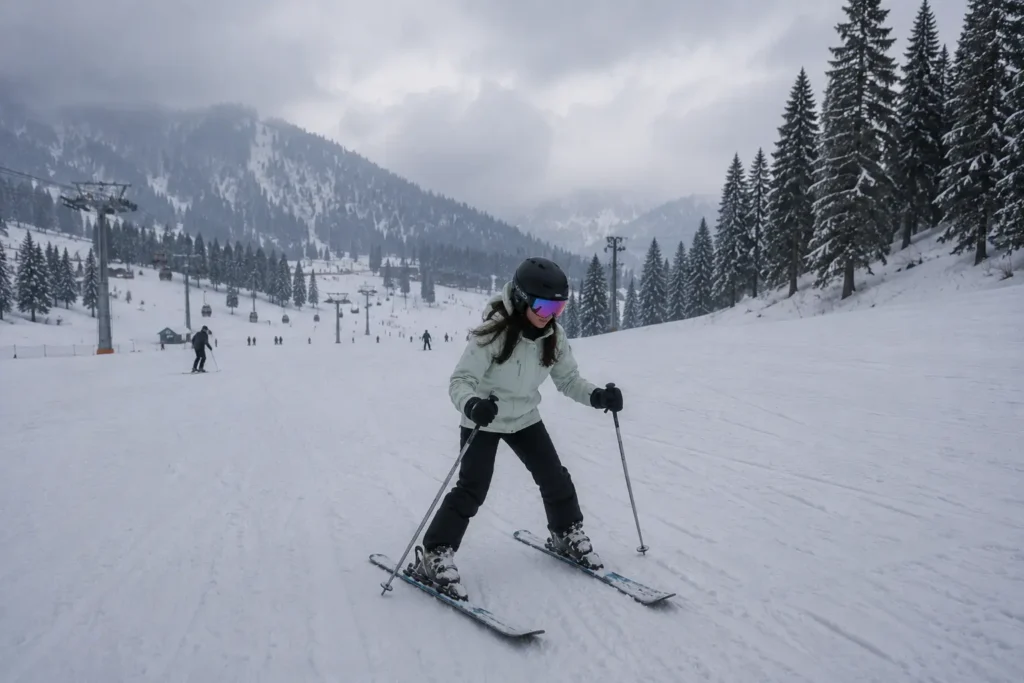
Essential Ski Safety Tips
Ski Safety Checklist
Is Learning Through a Ski Course Worth It?
While it’s possible to teach yourself some basics, a structured ski course offers several advantages:
Progression
Instruction
Safety
from the Beginning
on the Slopes
Fitted Equipment
Key Takeaways
Frequently Asked Questions
Yes. Thousands of adults learn skiing every year. Age is far less important than enthusiasm, patience, and proper instruction.
Skiing requires moderate fitness, but you don't need to be an athlete. Improving your balance, leg strength, and endurance before your trip can make learning easier.
Compared with many international destinations, skiing in India is relatively affordable. Costs vary depending on accommodation, equipment rentals, travel, and whether you join a structured course.
The ideal period is generally from late December and early March , when destinations such as Gulmarg receive consistent snowfall and offer favourable skiing conditions.
No. Most beginner ski schools and guided programs offer rental equipment, allowing first-time skiers to learn without making a significant upfront investment.
The easiest way to learn skiing in India is by joining a beginner-friendly ski course at destinations like Gulmarg or Auli. Most courses include professional instruction, rental equipment, and training on gentle slopes, allowing first-time skiers to gain confidence within three to five days.
Your Beginner Skiing Journey
Learning to ski is easier than you think. Follow this simple step-by-step roadmap to progress from your first day on the snow to confidently skiing beginner slopes in India.
Destination
Ski Course
Equipment
Ski Lesson
Stop & Turn
Every Day
Confidence
Final Thoughts
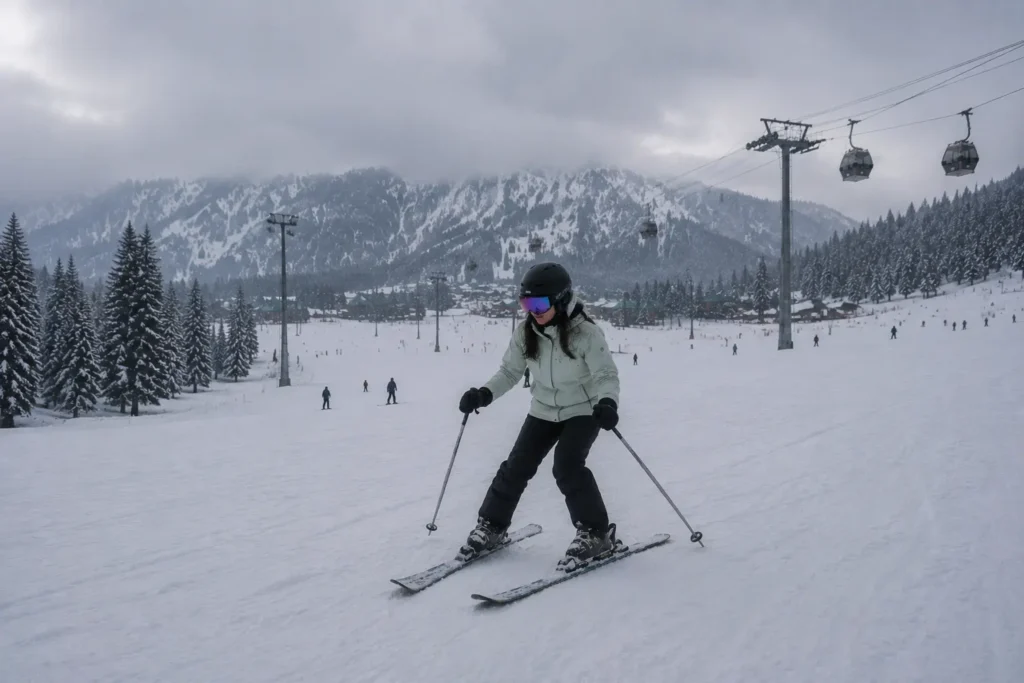
Learning to ski is more than simply picking up a new winter sport—it's an opportunity to experience the Himalayas in an entirely new way. With the right destination, professional instruction, and a willingness to learn, most beginners discover that skiing is far more approachable than they first imagined.
If you're considering your first skiing adventure, destinations like Gulmarg provide the ideal combination of reliable snowfall, beginner-friendly slopes, and breathtaking Himalayan scenery. Starting with structured guidance allows you to build confidence, develop proper technique, and enjoy the sport safely from your very first run.
Stay Inspired
If you enjoy practical travel guides like this, subscribe to the Travinfo newsletter to receive seasonal travel guides, skiing tips, destination insights, and expert adventure resources delivered directly to your inbox.
Ready to Take Your First Ski Lesson?
If you're looking for a guided beginner experience, explore the Beginner Ski Course in Gulmarg by Olixora. The course is designed specifically for first-time skiers and includes professional instruction, beginner-friendly training, and support throughout your learning journey.
5 thoughts on “How to Learn Skiing in India: A Beginner’s Complete Guide”