Is Skiing Safe for Beginners? Truths, Risks & Safety Tips
The Safety Pillars Overview
Fear of injury is the most common reason that travellers avoid winter sports. For absolute beginners, asking is skiing safe is a natural, necessary step before booking a mountain holiday.
Fortunately, skiing on groomed nursery slopes is highly safe. By staying on designated green runs and controlling your speed, the risk of serious accidents is extremely low. Furthermore, scheduling your trip during the best time to visit Gulmarg means learning on soft, fresh powder snow rather than hard-packed ice.
Understanding the Real Risks
Statistics show that skiing has a lower injury rate than standard sports like football or cycling. Because beginners ski slowly and fall on soft snow, most incidents are limited to minor muscle soreness. Consequently, you do not need to let fear hold you back from a winter adventure.
The Pillars of Ski Safety
How slopes, controls, and gear combine to keep you injury-free.
Initially, skiing down a slope can feel uncontrolled and scary. However, three built-in safety pillars work to protect you at all times. Specifically, they cover the terrain, speed control, and hardware calibration:
Groomed Nursery Slopes
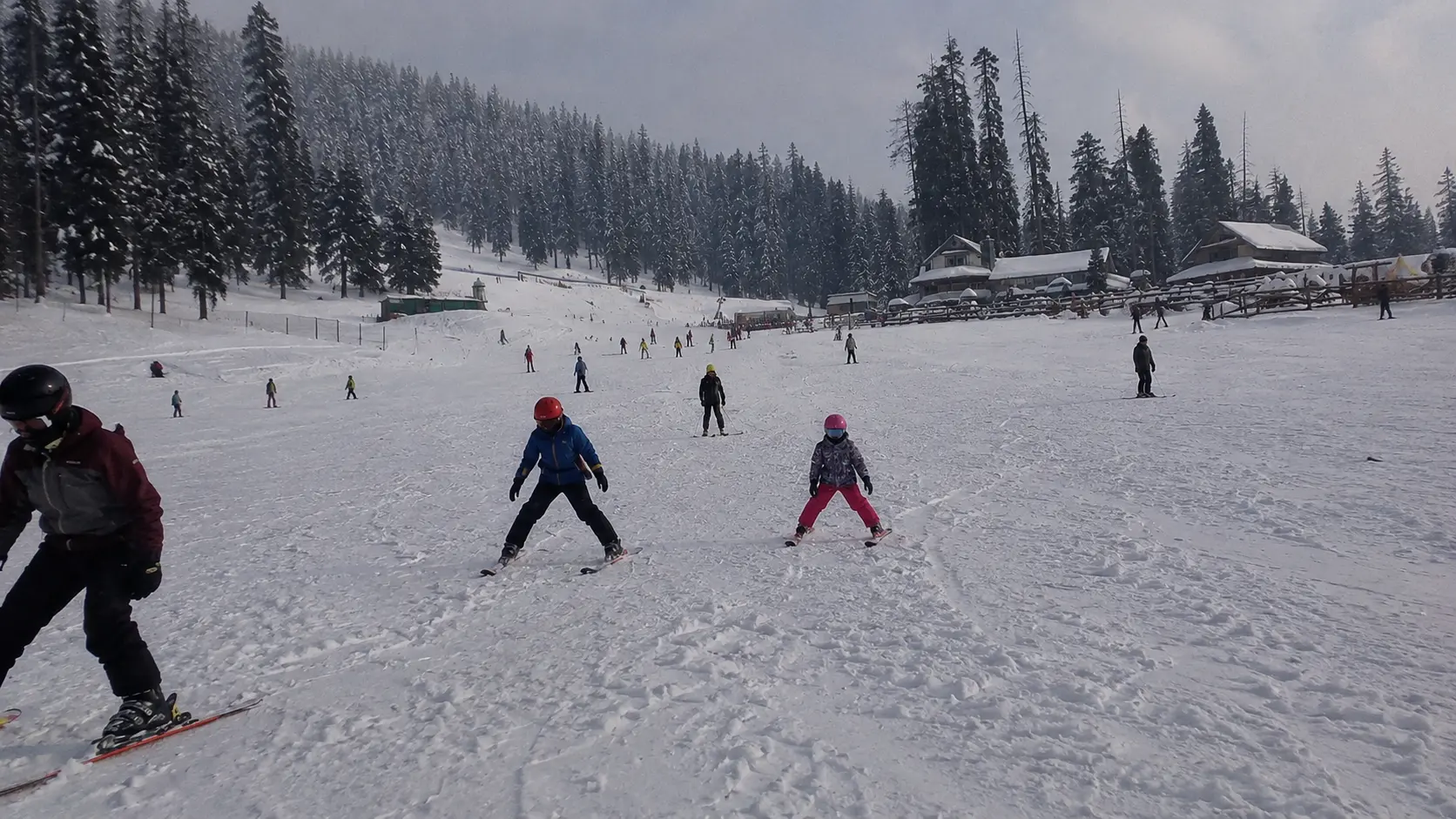
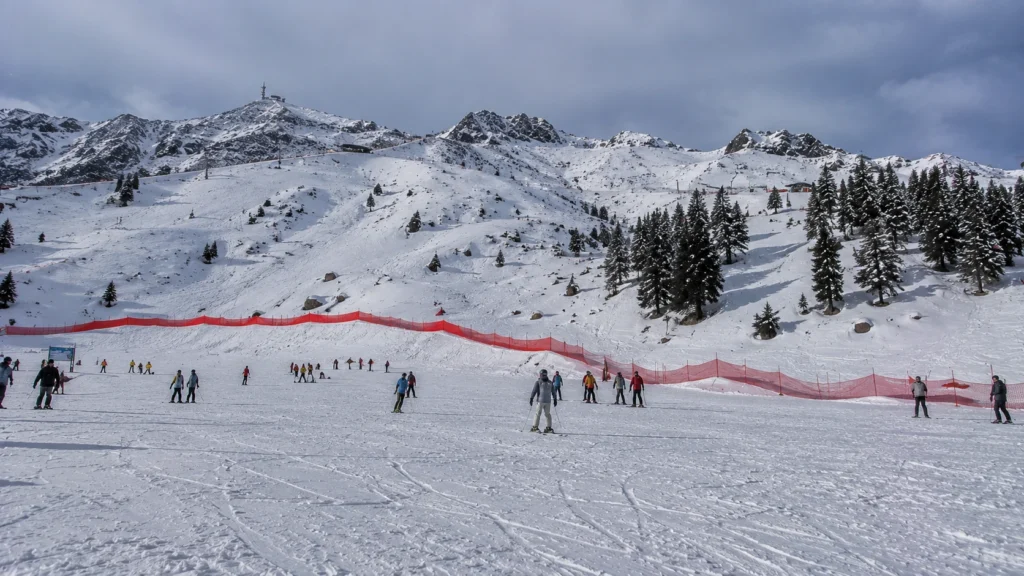
Beginners learn on wide, flat nursery slopes. These areas have no steep drops, obstacles, or fast-moving advanced skiers. Consequently, you have plenty of safe space to practice walking and turning.
The Snowplough Brake
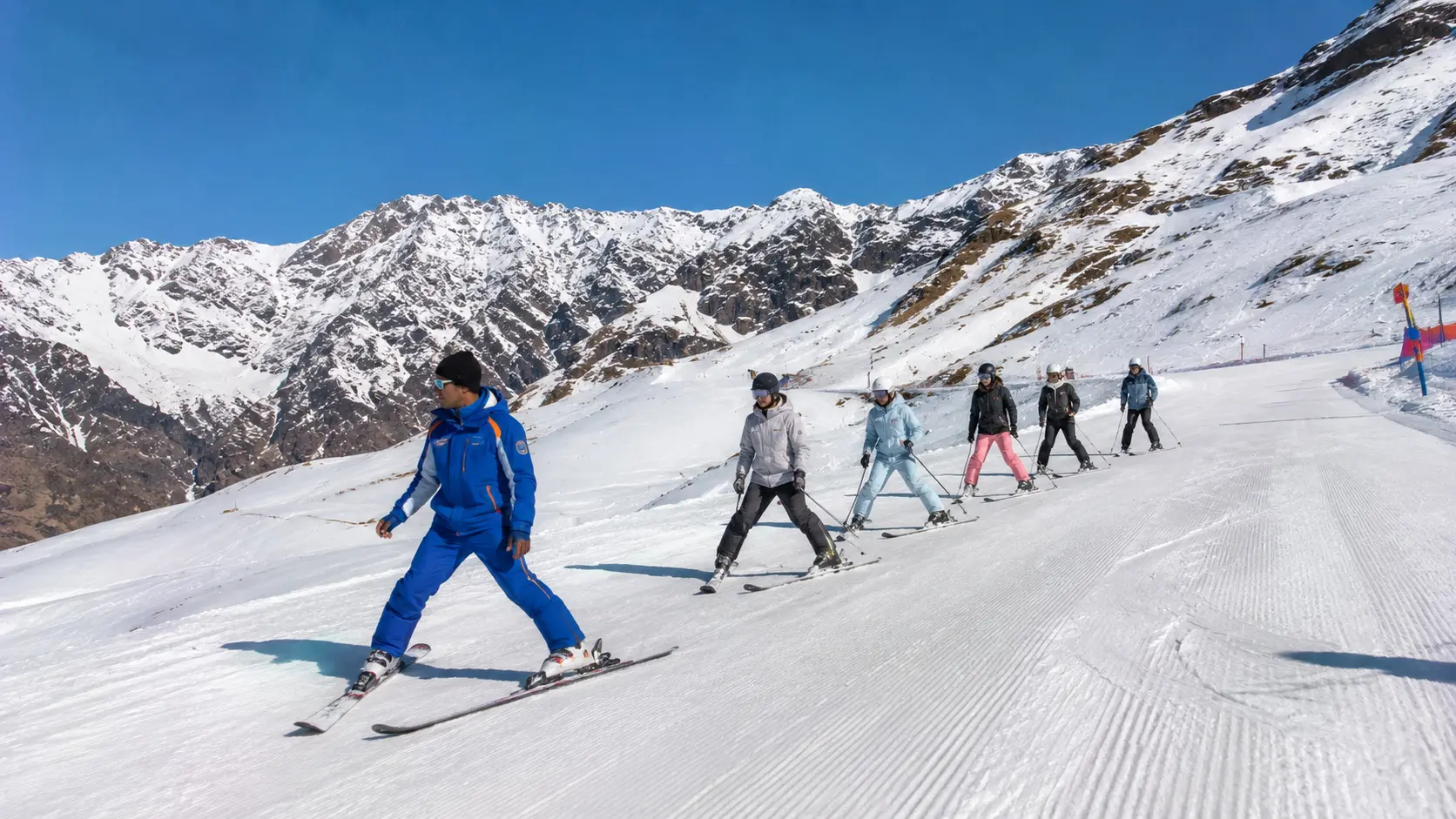
Your instructor will teach you the snowplough (wedge) stopping shape on day one. By pointing your ski tips together, you create friction. Therefore, you can brake instantly and control your speed easily.
Safety Binding Releases
Modern bindings are engineered to release your boot in a crash. Certified ski shops set this mechanism using your height and weight. Consequently, they protect your knees from severe twisting injuries.
Key Factors That Affect Skiing Safety
While nursery slopes are inherently secure, several factors influence your daily safety. Specifically, three critical choices will determine your safety level while training on the mountains:
Terrain Selection
Staying on green trails (nursery runs) minimizes collision risks. In contrast, entering red or black slopes too early increases fall hazards significantly.
Helmet Compliance
Helmets are mandatory. Head protection absorbs impacts against packed snow or accidental collisions, preventing serious injury.
Coach Supervision
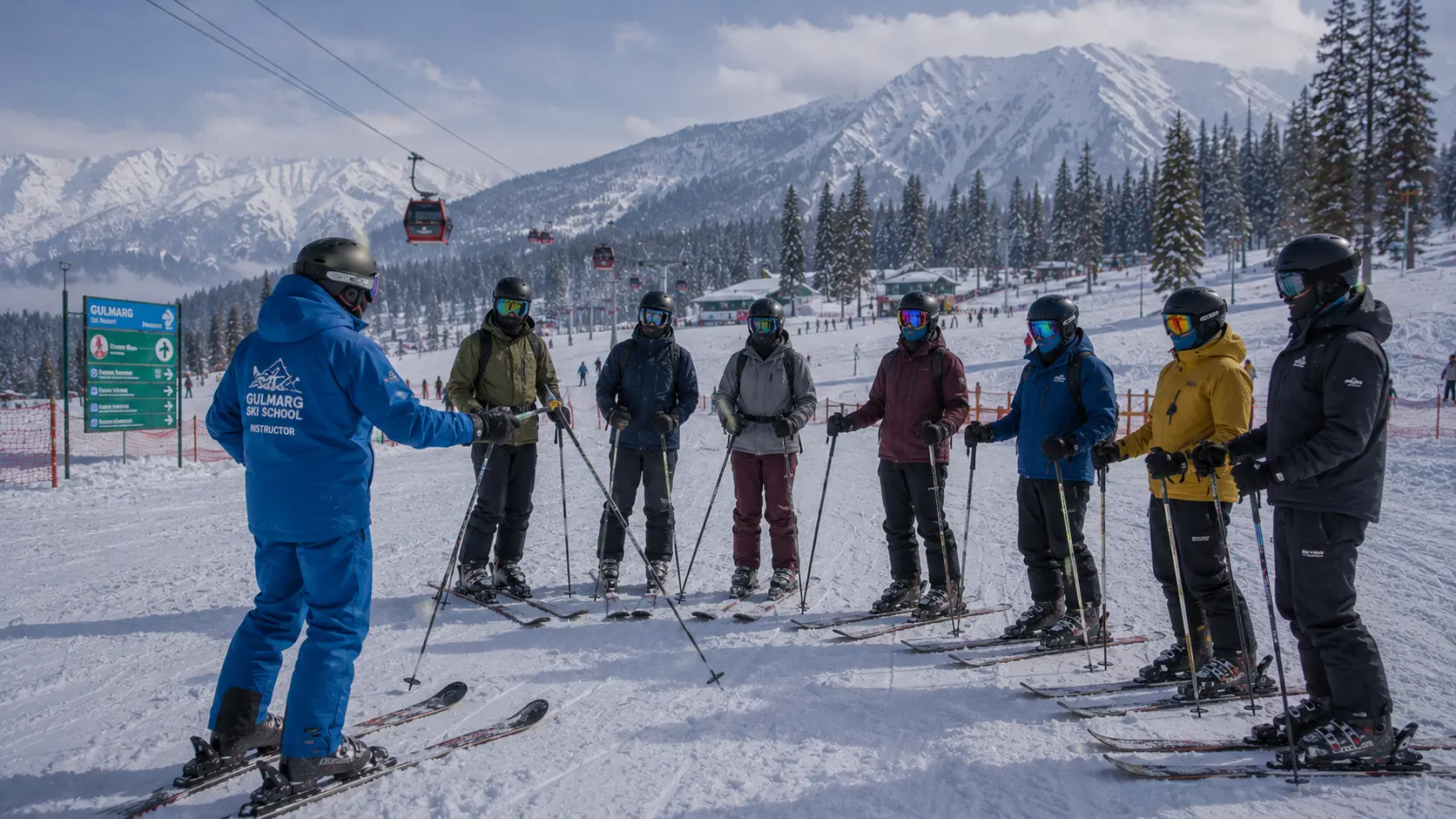
Skiing under professional supervision prevents dangerous situations. Instructors teach you how to fall safely without causing wrist twists.
Pro Tip
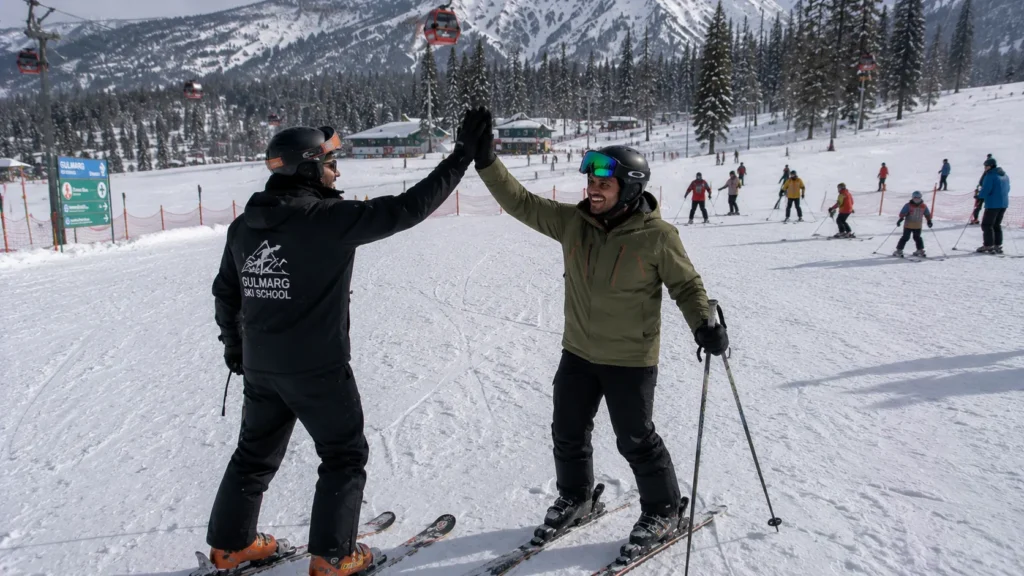
Choose All-Inclusive Ski Packages: Self-learning skiing on the slopes is highly risky and increases injury rates. Instead, join the guided winter ski course in Gulmarg by Olixora. These comprehensive packages bundle certified instructors and safety helmets. Consequently, you will learn under expert eyes and stay safe.
Common Safety Mistakes & Safe Habits
Common Safety Mistakes
- Skiing Under the Influence Drinking alcohol slows down your reflexes and reaction times. Consequently, it leads to dangerous falls on slopes.
- Skiing When Exhausted Most beginner injuries happen at the end of the day when muscles are tired. Therefore, take breaks when feeling fatigued.
- Skiing Off-Piste Early Entering ungroomed deep powder terrain without experience increases avalanche risks. Always stay on marked trails.
Essential Safety Practices
- Learn the Skier’s Responsibility Code Always stay in control and give downhill skiers the right of way. This is the primary rule of snow safety.
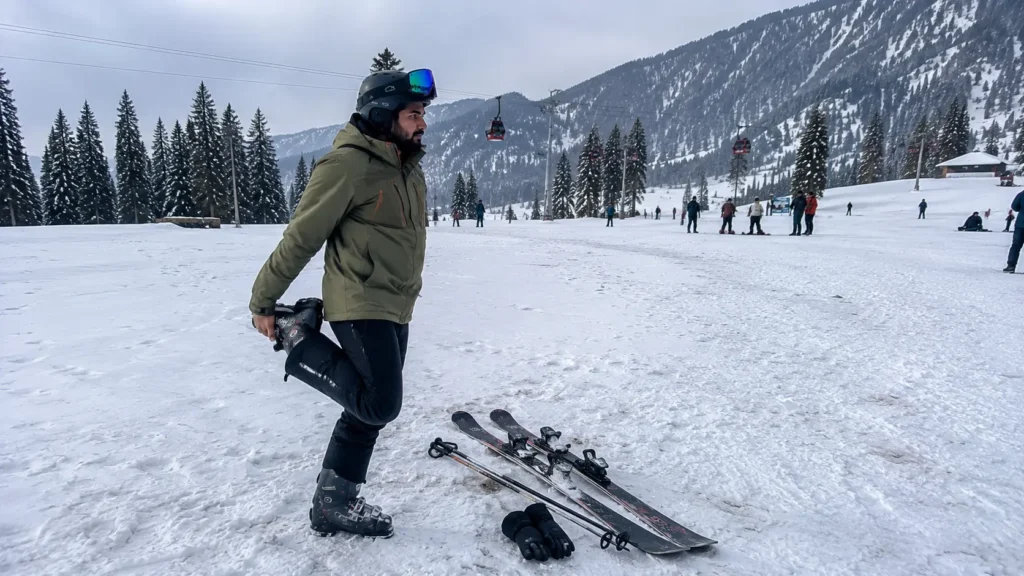
- Warm Up Before Skiing Cold muscles tear easily. Spend 10 minutes stretching your legs and knees before clicking into your bindings.
- Monitor Resort Wind Speeds High winds increase freezing risks. Check mountain weather conditions via Gulmarg snow forecasts.
Frequently Asked Questions
Clear answers to common questions about beginner skiing safety.
Is skiing safe for absolute beginners?
Yes, skiing is highly safe for absolute beginners. Because training takes place on flat nursery runs under the eye of coaches, speeds are low and collision risks are minimal.
Is skiing safer than snowboarding?
Yes, skiing is generally safer for beginners during the first few days. Snowboarders lock both feet to one board, leading to frequent backward falls that can strain wrists. Skier falls are typically slower and gentler.
How common are skiing injuries for beginners?
Injuries are very rare. The most common issues are muscle soreness in your thighs and calves. Serious sprains only occur when beginners ignore safety rules or enter advanced slopes too early.
Do I need to wear a helmet for nursery slopes?
Yes, absolutely. You must wear a helmet at all times. Head protection protects you against hard-packed snow during unexpected falls and secures your safety on the slopes.
Can kids and older adults learn skiing safely?
Yes, skiing is safe for all age groups. Children have a low center of gravity and balance quickly. Older adults can learn safely by practicing at a slower pace with private instructors. For preparation guides, check our main how to learn skiing in India guide.
Does booking a guided course reduce safety risks?
Yes, joining a guided program like the Beginner Ski Course in Gulmarg by Olixora Travels guarantees structure. Safety briefings, gear testing, and professional instructors are provided, minimizing risks significantly.
Key Takeaways
An honest summary of skiing safety guidelines:
Safety on Nursery Slopes
Beginner runs are wide, flat, and groomed nightly. They have no steep cliffs or high-speed skiers.
Wear Head Protection Always
Never step onto the slopes without a certified safety helmet, regardless of your skill level.
Avoid Fatigue Accidents
Take regular warm-up breaks. Most accidents occur when muscles are tired at the end of the day.
Final Thoughts
Ultimately, skiing is a highly safe, controlled activity when practiced on green nursery slopes. While falling is a normal part of the learning cycle, low speeds and soft snow prevent serious injury. Consequently, you can focus on building your confidence without fear.
Therefore, do not let safety worries stop you from experiencing the snow. Book a guided course, wear a certified helmet, and respect trail markers. By following the basic rules of the mountain code, you will enjoy a safe, memorable winter adventure.
Ready to Book Your Ski Adventure?
If you are looking for a guided beginner experience, explore the Beginner Ski Course in Gulmarg by Olixora. The programme is designed specifically for first-time skiers and includes professional instruction, accommodation, equipment rentals, and on-slope support throughout your learning journey.
Explore the Beginner Ski Course in Gulmarg