
Skiing Equipment Explained for Beginners: A Complete Gear Guide
Beginner Ski Gear Checklist
Walking into a ski rental shop for the first time can feel overwhelming. With racks of heavy plastic boots and rows of metal-edged skis, understanding skiing equipment explained is key to starting confidently.
Indeed, skiing relies heavily on technical gear that translates your body movements into the snow. By understanding how each piece of equipment works, you will feel much more comfortable on your first day. Furthermore, planning your trip during the best time to visit Gulmarg guarantees that rental shops are fully stocked with high-quality, serviced gear.
Why Fitting Gear Right Matters
Unlike standard shoes, ski boots must fit tightly to transmit your ankle movements directly to your skis. If your boots are too loose, you will struggle to steer and turn. Consequently, learning to ski will feel much more difficult and exhausting than it actually is.
Essential Equipment Broken Down
An in-depth breakdown of the equipment you will rent at the resort.
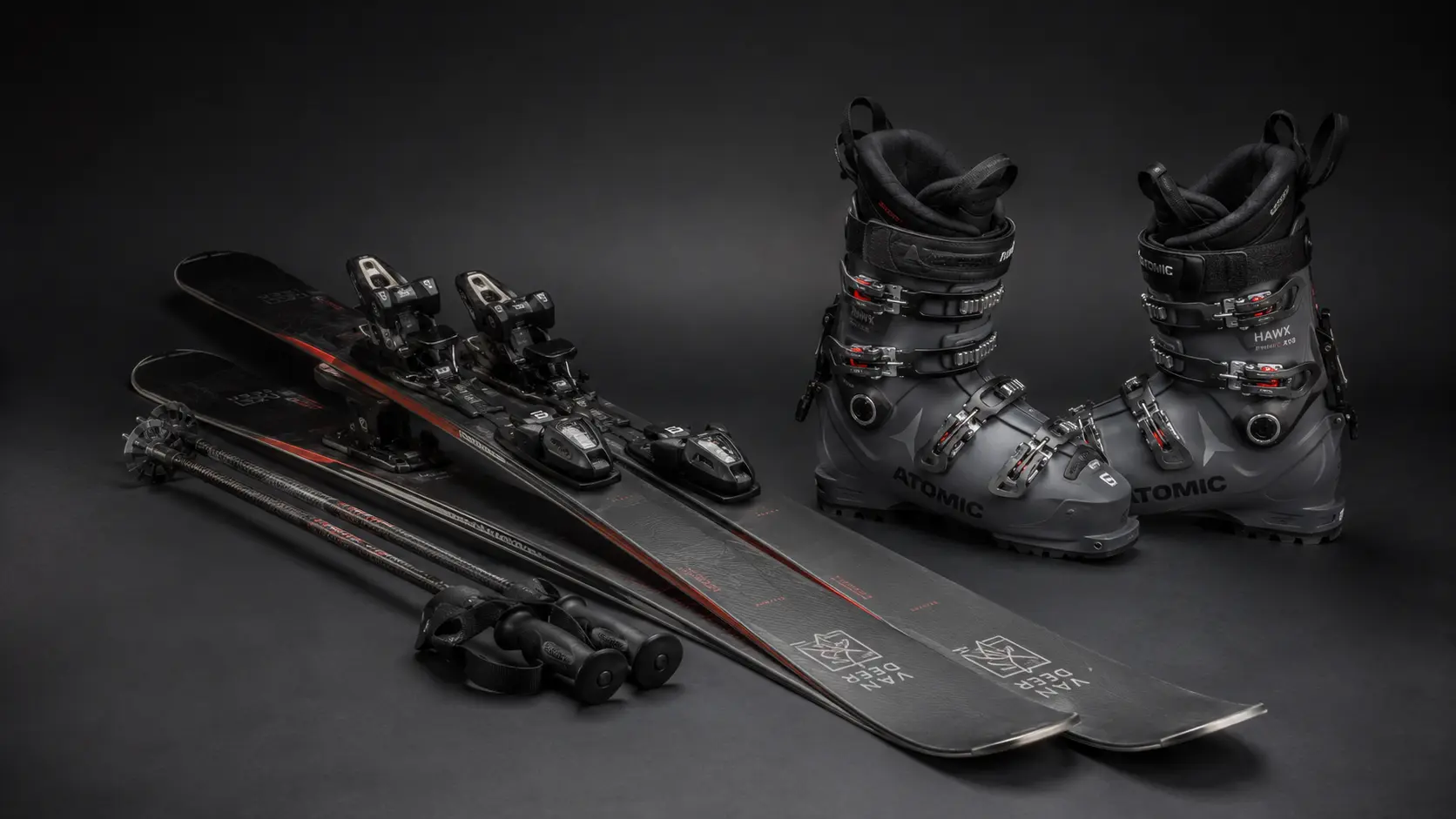
Initially, ski gear can feel stiff and strange to walk in. For this reason, coaches recommend spending your first hours learning how the boots, bindings, and skis interact. Specifically, here are the three primary hardware components:
Ski Boots (Your Anchor)
Made of tough plastic shells with padded inner liners. Ski boots are designed to lock your ankles rigid. Consequently, when you lean forward, your weight shifts directly onto the skis, allowing you to turn.
Ski Bindings (The Release)
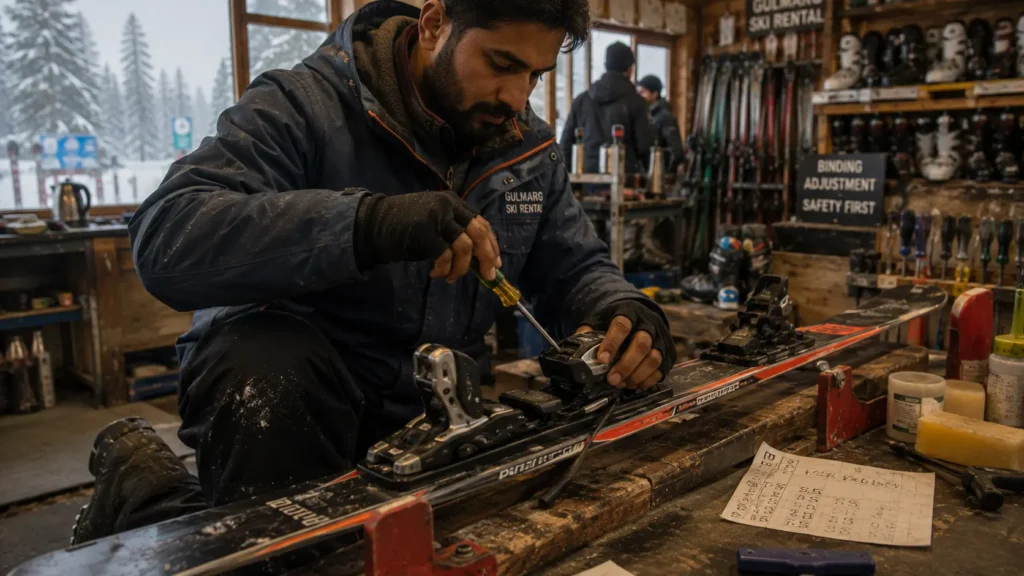
The mechanism that locks your boot into the ski. Importantly, bindings feature spring-loaded releases calibrated to your weight. Therefore, during a hard fall, the binding pops open to protect your knees from twists.
Skis & Poles (The Slides)
Skis feature steel edges to grip snow and smooth bases to slide. Beginners use shorter skis because they are easier to turn. Additionally, poles are used to maintain balance on flat ground.
Key Factors in Selecting Your Ski Gear
While standard rental gear is modular, rental shops must calibrate the equipment specifically for you. Specifically, three critical factors dictate how your skis and bindings are set up:
Height & Weight
Your physical size determines the correct ski length. Shorter skis are lighter and easier to control. Consequently, beginners are given skis that reach chest-height.
Ability Level
Beginners need flexible skis that turn slowly and safely. In contrast, advanced skiers require stiff carbon-fiber skis for high-speed stability.
DIN Release Value
A scale that controls how easily your bindings release in a fall. Certified technicians calculate this based on weight, height, and age to prevent knee injuries.
Pro Tip
Trust the Experts: Never try to adjust your own binding DIN settings. Only certified ski technicians should adjust bindings using calibration tools. Consequently, joining a structured winter ski course in Gulmarg by Olixora is highly recommended, as expert support is on hand daily to adjust your gear.
Common Equipment Mistakes & Safety Guidelines
Common Gear Mistakes
- Buckling Boots Too Loose Leaving boot buckles loose to feel comfortable stops your shins from driving the skis. Consequently, you lose steering control.
- Renting Advanced Stiff Skis Advanced skis are rigid and designed for speed. Beginners using them will struggle to turn. Therefore, always choose flexible beginner skis.
- Stepping in with Icy Soles Ice on boot soles prevents proper binding engagement. Consequently, your ski might pop off unexpectedly while sliding.
Essential Gear Safety
- Dry Your Liners Nightly Cold, damp liners freeze your feet. Remove liners from shells each night and place them near room heaters.
- Always Wear a Certified Helmet Head protection is vital for nursery slopes. Rent a helmet that fits snug without shaking.
- Monitor Resort Wind Levels High winds can stop ski lifts. Check weather safety reports daily via Gulmarg snow forecasts.
Frequently Asked Questions
Clear answers to common questions about beginner ski equipment.
What is the most important piece of ski equipment?
Ski boots are the most important piece. They transfer your muscle inputs directly to the skis. Consequently, poorly fitting boots can make steering impossible and cause pain.
How tight should beginner ski boots be?
Ski boots must fit like a firm handshake. Your toes should touch the front when standing, but pull back slightly when you bend your knees forward. Heel lift must be minimal.
Should beginners use shorter or longer skis?
Beginners should always use shorter skis. Shorter skis turn with less effort and are easier to stop. Typically, they reach between your chest and chin height.
Are ski poles necessary for absolute beginners?
No, many instructors do not give poles to beginners on day one. Learning without poles forces you to find balance on your feet, speeding up your core posture development.
Do government ski courses provide equipment?
Yes. Subsidized courses at the Indian Institute of Skiing & Mountaineering (IISM) include boot, ski, and pole rentals. However, you must bring goggles, helmets, and warm clothing. Learn more in our how to learn skiing in India guide.
Does the Olixora Beginner Course include gear?
Yes. The guided Beginner Ski Course in Gulmarg by Olixora Travels includes complete daily rentals (skis, boots, poles, and helmet). This saves you from paying daily retail prices at local shops.
Key Takeaways
An honest summary of beginner ski equipment:
Boots First
Ensure your boots fit tight with buckles closed. This locks your ankles for steer control.
DIN Settings Matter
Let local certified technicians calibrate your binding releases. Never adjust bindings yourself.
Choose Short Skis
Rent shorter skis (reaching chest-height) for easier stopping and turning on your first days.
Final Thoughts
Ultimately, understanding your ski equipment makes your first week on the slopes much more enjoyable. By knowing how boots and bindings work together, you will feel much more confident. Consequently, you can focus on mastering your balance and stopping safely.
Therefore, do not let gear details scare you away from booking your winter trip. Rent your equipment at the resort and trust the certified rental technicians to set up your bindings. With the right hardware calibrated for you, you will safely progress toward your first parallel turns.
Ready to Book Your Ski Adventure?
If you are looking for a guided beginner experience, explore the Beginner Ski Course in Gulmarg by Olixora. The programme is designed specifically for first-time skiers and includes professional instruction, accommodation, equipment rentals, and on-slope support throughout your learning journey.
Explore the Beginner Ski Course in Gulmarg
2 thoughts on “Skiing Equipment Explained for Beginners: A Complete Gear Guide”