What to Wear for Skiing: Complete Beginner Packing Guide
The 3-Layer System Overview
Packing for a snowy holiday is very different from preparing for a normal winter vacation. For first-time skiers, understanding what to wear for skiing is crucial to staying comfortable on the mountain.
Indeed, standing on a freezing slope in the wind requires specialized protective clothing. By choosing the right gear, you will stay warm, dry, and focused on learning. Furthermore, visiting during the best time to visit Gulmarg means preparing for temperatures that drop well below freezing.
Why Proper Layering Matters
Skiing is a physically active sport. Consequently, you will sweat while skiing, but freeze the moment you sit on a chairlift. By using a modular layering system, you can easily adjust your temperature as your activity levels change throughout the day.
The Gold Standard: The 3-Layer System
How to choose the correct fabrics for each layer of your ski outfit.
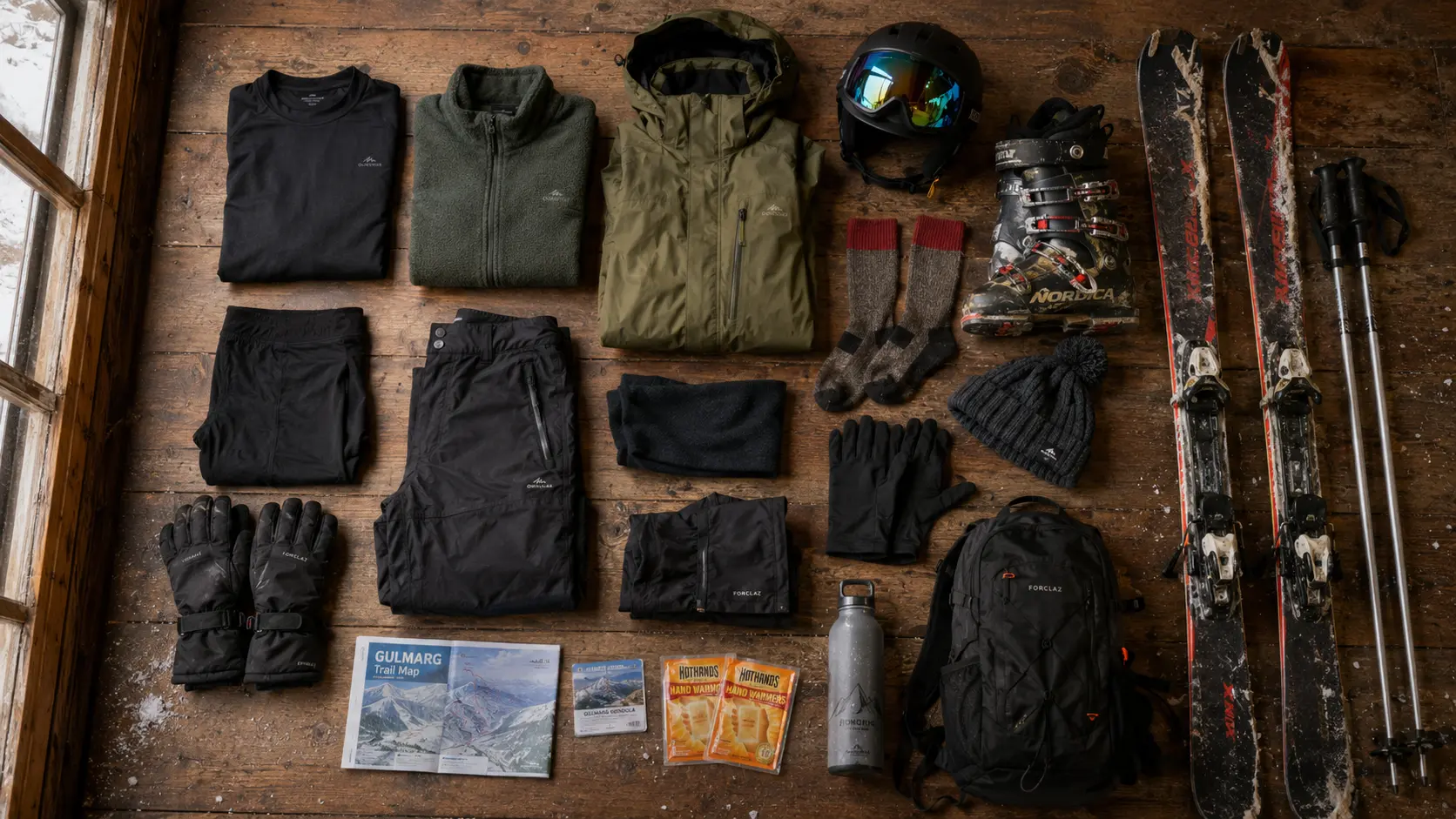
Initially, dressing for the snow can feel bulky and uncomfortable. For this reason, professional skiers rely on a technical three-layer system. Each layer has a specific job, working together to keep you comfortable:
Base Layer (Thermals)
Worn tight against the skin. Thermals must be made of merino wool or synthetics. They wick sweat away from your skin. Consequently, they prevent you from catching chills when sitting still.
Mid Layer (Insulation)
Traps your body heat to keep you warm. Excellent options include fleece sweaters, micro-puff down jackets, or synthetic mid-layers. Therefore, you can easily add or remove them based on the weather.
Outer Layer (Shell)
Protects you from external snow, rain, and wind. Your outer ski jacket and pants must be waterproof and windproof. Consequently, they keep the dry snow from melting on your inner layers.
Key Factors That Decide Your Ski Outfit
While layering is standardized, weather variations affect how heavily you need to insulates. Specifically, three core weather variables will influence your daily clothing configuration:
Daily Temperature
On very cold days (below -10°C), you will need a thicker mid-layer fleece. In contrast, spring skiing in March only requires light base layers.
Wind Chill Levels
High winds strip body heat away rapidly. Consequently, a windproof outer jacket is essential to prevent severe cold on chairlifts.
Snow & Moisture
Heavy snow fall melts quickly on warm clothing. Therefore, your shell jackets must have a high waterproof rating (minimum 10,000mm) to stay dry.
Pro Tip
Choose All-Inclusive Ski Packages: Renting technical ski wear, helmets, and goggles individually can get incredibly expensive. Instead, book the guided winter ski course in Gulmarg by Olixora. These comprehensive courses bundle equipment rentals and stays. Consequently, you will save money and avoid logistics stress.
Common Packing Mistakes & Safety Guidelines
Common Packing Mistakes
- Wearing Cotton Socks Cotton absorbs sweat and holds moisture against your skin. Consequently, your feet will freeze instantly.
- Layering Double Socks Wearing two pairs of socks restricts blood circulation in tight boots. Therefore, it causes cold toes and blisters.
- Dressing in Heavy Denim Jeans absorb moisture and freeze solid. Consequently, you must always wear waterproof polyester ski trousers.
Frostbite & Safety Protection
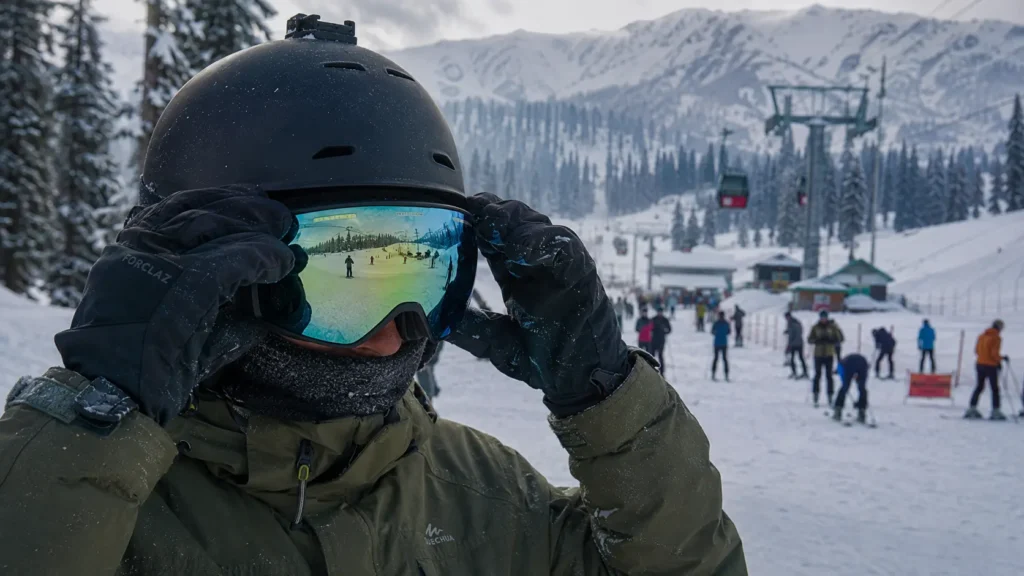
- Always Wear Ski Goggles UV rays reflecting off white snow can cause snow blindness. Protect your eyes with tinted goggles.
- Bring Waterproof Gloves Fleece or woolen gloves soak through when you fall in snow. Rent or buy insulated, waterproof gloves.
- Check Resort Wind Speeds High winds increase freezing risks. Check mountain weather conditions via Gulmarg snow forecasts.
Frequently Asked Questions
Clear answers to common questions about ski clothing and packing.
What should a beginner wear for their first ski trip?
A beginner needs a moisture-wicking synthetic base layer, an insulating mid-layer (fleece or down), and a waterproof outer jacket and pants. Additionally, bring thermal socks, waterproof gloves, ski goggles, and a neck warmer.
Can I wear a standard winter coat for skiing?
No, standard coats are usually not waterproof or breathable enough. They soak through when you fall in wet snow, and lack “snow skirts” to prevent snow from sliding up your back. Renting or buying a dedicated ski jacket is highly recommended.
Why is cotton banned on the ski slopes?
Cotton absorbs moisture and holds it. When you sweat, the cotton gets wet and stays cold against your body. This can lead to rapid body cooling or hypothermia in cold winds. Choose polyester, nylon, or merino wool instead.
Should I rent or buy my ski jacket and pants?
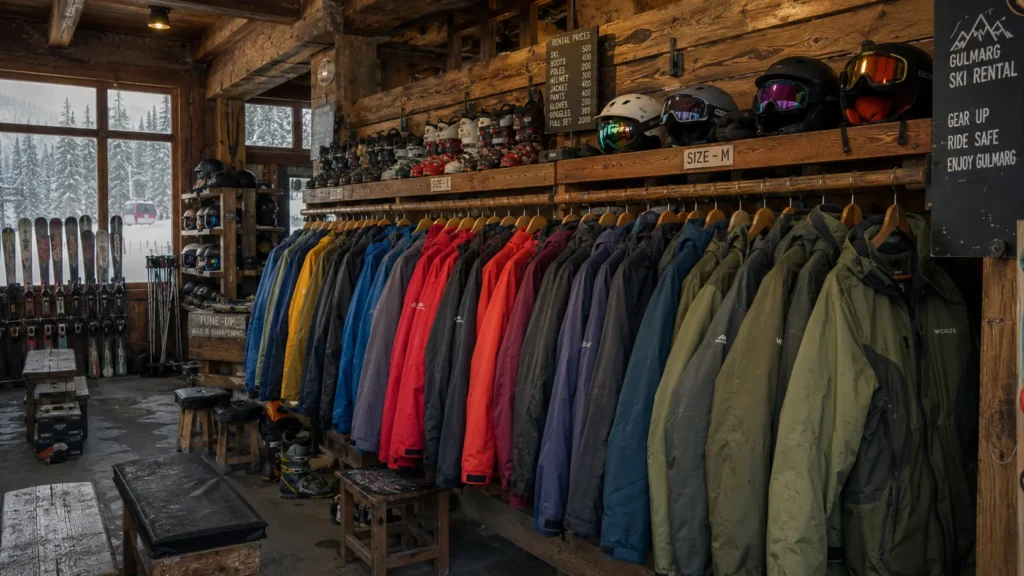
For your first trip, it is much cheaper to rent your outer jacket, pants, and helmet. Most local rental shops in Gulmarg and Auli offer ski clothing rentals for ₹300-₹500 per day. For more packing details, check our main how to learn skiing in India guide.
What ski clothing is provided at government institutes?
Government institutes like the Indian Institute of Skiing & Mountaineering (IISM) provide basic ski gear (skis, boots, poles) during courses. However, students must bring their own personal clothing, thermals, goggles, and waterproof gloves.
Is it better to book an all-inclusive ski package?
Yes. Booking an all-inclusive package like the Beginner Ski Course in Gulmarg on Olixora Travels takes the hassle out of finding certified rental gear and jackets on the spot. Everything is sorted before you arrive.
Key Takeaways
An honest summary of ski clothing rules:
Layering is Vital
Always use the 3-layer system (Base, Mid, Outer) to regulate your body temperature on the mountain.
Say No to Cotton
Avoid cotton thermals and socks. Choose technical synthetics or merino wool instead to wick sweat.
Rent Outerwear
Rent your main outer ski jacket, trousers, helmet, and goggles locally to save massive packing space and money.
Final Thoughts
Ultimately, dressing correctly for the snow is the difference between a fantastic holiday and a miserable, freezing trip. By understanding the three-layer system, you can easily control your comfort on the mountain. Consequently, you will spend your energy enjoying the slopes rather than shivering.
Therefore, do not let budget worries or packing anxiety hold you back. Rent your outer shell jacket and trousers locally, but invest in high-quality wool thermals. With the right layers protecting you, you will safely and comfortably master your first turns in the snow.
Ready to Book Your Ski Adventure?
If you are looking for a guided beginner experience, explore the Beginner Ski Course in Gulmarg by Olixora. The programme is designed specifically for first-time skiers and includes professional instruction, accommodation, equipment rentals, and on-slope support throughout your learning journey.
Explore the Beginner Ski Course in Gulmarg